How to Stop Topping the Golf Ball: 7 Simple Fixes for Beginners
Learn how to stop topping the golf ball with seven practical fixes for beginners, from ball position and posture to weight transfer and simple range drills.
Hero image: Photo by Mick Haupt on Pexels.
If you're wondering how to stop topping the golf ball, you're certainly not alone. It's one of the most frustrating problems for beginner and amateur golfers. The ball never gets airborne, it skids away low and short, and your hands feel a sharp jolt that tells you the club found the wrong part of the ball. It also tends to happen in front of an audience, which never helps. The good news is that topping is usually a setup or sequence problem rather than a mystery, and most of the fixes are simple enough to work on at the range this week.
This guide explains why golfers top the ball and sets out seven practical fixes for beginners, plus a few easy drills and the mistakes that keep the topped shot hanging around.
What a Topped Shot Actually Is
A topped shot happens when the leading edge or the very bottom of the clubface catches the top half of the ball. Rather than compressing the ball against the turf, the club glances across the top of it. The ball stays low, the shot comes up well short of the target, and the strike feels thin and clicky. With irons it often produces a low runner, and with a driver it can produce a weak bunt that barely clears the tee.
Because the miss is a strike problem rather than a direction problem, fixing it is usually about where the club is travelling at the moment it reaches the ball, not about your swing path or how hard you are swinging.
Why Amateur Golfers Top the Ball
There are only so many reasons a club bottoms out above the ball, which is encouraging. If you understand which one is causing yours, the cure becomes a lot more obvious. The most common culprits for beginners and higher handicappers include:
Poor posture, where you sit back on your heels or slump over so the club bottoms out behind the ball
Trying to lift the ball into the air instead of hitting down into it
Standing too far away from the ball, so you have to reach and straighten to get anywhere near it
Grip and forearm tension, which makes the whole swing tight and short
Ball position that has crept too far forward or too far back in the stance
Weight hanging on the back foot through impact, so the low point of the swing stays behind the ball
Most players have one dominant cause and a couple of smaller contributors. Read the list and pick the one that sounds most like the last topped shot you hit.
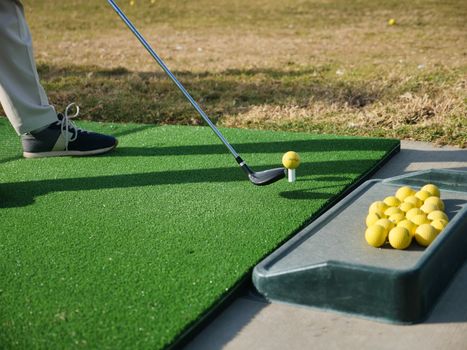
7 Simple Fixes for Topped Shots
Work through these in order, one at a time. Changing everything at once rarely helps and usually makes the next range session feel worse before it feels better.
1. Check your ball position in the stance
Ball position is the quickest thing to check and the easiest to get wrong. If the ball drifts too far forward with a short or mid iron, the club reaches the bottom of its arc before the ball and then rises into it. If it drifts too far back, you may catch it on the way down but with a steep, cramped motion that encourages a lift out of the shot.
A reliable starting point is to keep the ball in the same relationship to your chest throughout the set, moving it slightly forward as the clubs get longer. The ball should feel as though it sits just forward of the centre of your stance with a mid iron. Before every shot, glance down and check it has not crept forward again.
2. Build a posture you can return to
Bad posture is one of the classic causes of topped shots. If you crouch too much, the club bottoms out too early. If you sit back on your heels with your weight behind you, the low point of the swing stays behind the ball as well.
Set up with a slight hinge from the hips rather than a slump from the waist, knees softly bent, weight spread across the middle of your feet rather than in the heels or on the toes. Let your arms hang naturally under your shoulders and check you feel balanced enough to hold the position for 20 seconds without wobbling.
3. Stand a little closer to the ball
Standing too far away forces you to reach, and reaching is a topping machine. The body has to straighten through the shot to get to the ball, which pulls the clubhead up and away from the turf.
A useful check is that your hands hang just outside your leading thigh with a mid iron, so your arms can hang rather than stretch. If you feel as though you are leaning forward at full stretch, step in a couple of inches. If your hands are brushing your legs, step back a fraction.
4. Keep your head steady without forcing it down
Plenty of beginners are told to keep their head down, and they take the instruction far too literally. Jamming your chin into your chest restricts the turn, makes the backswing feel tight, and can make the body lift as you fight to make room for the club.
Keep your head steady, with your eyes on the ball and your chin clear of your chest rather than buried in it. Allow the head to rotate a little with your chest on the way back and through. Steady is the goal, not clamped down. If you feel your shoulders can turn freely under your chin, you have the balance about right.
5. Learn to hit down, not to lift the ball
Trying to help the ball into the air is behind a huge number of topped shots. The club has loft built into it, so it does not need any help. When you try to scoop or lift, you lean back, the hands fall behind the ball, and the leading edge arrives high.
Instead, feel as though you are striking the ball and then brushing a little turf after it. Your hands should be slightly ahead of the ball at impact with an iron, and the divot should start in front of where the ball was sitting. This is the single biggest mindset shift for beginners, and it takes repetition before the feeling feels normal.
6. Transfer your weight rather than hanging back
Weight hanging on the back foot through impact is a reliable way to keep the club's low point behind the ball. If your finish is a small, flat-footed motion with your chest facing the target and your belt buckle pointing at where the ball was, you probably are not shifting through the shot.
At address with an iron, a little more weight on the lead foot than the trail foot sets the tone. On the backswing, feel the pressure move into the trail foot, then shift back to the lead foot as you start down. Finish with your trail heel off the ground and your chest turning towards the target.
7. Loosen your grip and soften the tension
Tension tops are a real pattern. When the grip tightens and the forearms lock up, the swing becomes short and stiff, the club stops brushing the turf, and the leading edge comes in high. Many players do it without noticing, especially when a good round is on the line.
Hold the club firmly enough that it does not move in your hands, then check your forearms feel soft rather than locked. Take a couple of easy waist-high swings and listen for the club brushing the grass. If you cannot hear it, you are probably gripping too tightly.
Three Driving Range Drills for Topped Shots
Grass brush drill
Make a series of easy waist-high swings with an iron before you hit a single ball. The only aim is to brush the grass at the same spot on each swing. This rebuilds your sense of where the club bottoms out and gives you instant feedback when it starts rising again. Once you can repeat the brush, add a ball.
Feet-together drill
Hit short shots with your feet close together, starting with a wedge. It forces a small, balanced motion and makes it obvious when you are hanging back or leaning into the ball. If you lose balance, you have found the thing that is pulling the club off the turf. Build up to longer clubs only when the short ones feel calm.
Tee-ahead drill
Push a tee into the ground a couple of inches in front of your ball and try to brush or clip that tee through impact. It gives you a target beyond the ball instead of worrying about the ball itself, which naturally encourages the club to keep travelling down and forward. Start with wedges and work up.

Common Mistakes When Trying to Stop Topping
Changing five things at once and having no idea which fix worked
Lifting the head early to watch the shot, which pulls the chest up and out of the shot
Forcing the head down as a cure, which tightens the turn instead of freeing it
Hanging back on the trail foot to try to help the ball into the air
Practising without feedback, so a good strike and a topped one feel much the same
Topping With the Driver
The driver is a slightly different job because the ball is teed up and struck on a slightly upward path. That said, the same fundamentals apply: a ball position towards the front of the stance, a balanced posture, and no attempt to scoop the ball up. If you are topping the ball with your driver, check that the tee height and ball position are suitable. Then make a few smooth swings at half speed, focusing on staying balanced and making contact near the centre of the clubface.
How a Scorecard Review Fits Into Your Practice
There is one thing the range cannot tell you: whether topping is actually costing you shots, or whether it just feels annoying. That is where FairwayIntelAI helps. It is an AI scorecard scanner that turns a photographed scorecard into hole-by-hole round analysis, plain-English insights and a personalised practice plan.
FairwayIntelAI cannot see your swing or identify individual topped shots, penalty strokes or three-putts from a scorecard alone. However, it can help you spot scoring patterns, identify holes where you regularly struggle and review your progress over time. Combine these insights with your own notes about what happened during each round to decide which parts of your game need the most practice.
Combine that with the fixes above and you have both ends covered. The range work sorts out the strike, and the round data tells you whether the work is paying off.
Frequently Asked Questions
Why do I top my irons but hit my driver fine?
Irons are usually topped because the low point of the swing is staying behind the ball, often through hanging back on the trail foot or a ball position that has crept forward. The driver is teed up and struck on a slightly upward path, so the same error can go unnoticed. Work on hitting down with irons at the range.
Should I keep my head down to stop topping the ball?
No, not in the literal sense. Clamping the chin into your chest restricts your turn and often causes a stiff, cramped swing that makes topping more likely. Keep your head steady with your eyes on the ball, allow it to rotate a little with your chest, and you will have a freer motion and a better chance of a clean strike.
How long does it take to stop topping the golf ball?
There is no fixed answer because it depends on the cause and how much you practise. Most players see an improvement fairly quickly once they identify the dominant reason, whether that is posture, ball position, tension or weight transfer. Give each fix a proper session at the range rather than judging it after three swings.
What is the quickest check on the course if I top one?
Ball position first, then balance. Glance down and make sure the ball has not crept forward in your stance, then check your weight is spread across the middle of your feet rather than sitting in your heels. Those two checks catch a large share of topped shots without any technical thinking mid-round.
Is topping caused by swinging too hard?
Effort can contribute indirectly. Swinging flat out often tightens the grip and forearms, shortens the follow-through and pulls you out of balance, all of which make a thin or topped strike more likely. Try the next few shots at around three-quarter pace and feel the club brushing the turf.
Ready for personalised coaching?
Upload your latest scorecard for FairwayIntelAI analysis.